
A legislator’s staffer called a NJDA representative with what seemed like a simple question. ‘If the dental workforce is so short,’ she asked, ‘why doesn’t the state just train more hygienists?’ The NJDA rep took a breath. The honest answer required walking through five different bottlenecks, three different state agencies, two professional regulations, and a timeline measured in years. He started at the beginning. The conversation took forty-five minutes.
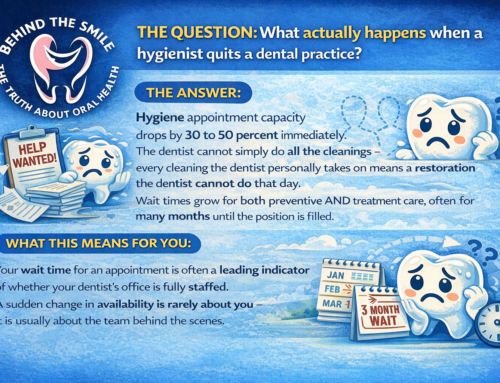
The dentist-led care team in NJ cannot grow overnight. Here is what the pipeline actually looks like, where it gets stuck, and why expanding capacity within existing practices matters more than waiting for new graduates.
STAGE 1: Becoming a Dental Hygienist
What it takes: 2 to 4 years of education through an accredited dental hygiene program, plus state licensure exams.
The bottleneck: Existing NJ hygiene programs are at capacity for both faculty and clinical placement spots. Adding more students requires hiring more faculty and finding more dental practices willing to host clinical rotations – both of which are themselves limited resources.
What it means: Even if a new student starts a hygiene program tomorrow, she will not be ready to join a dentist-led care team until at least 2027 or 2028.
STAGE 2: Becoming a Dental Assistant
What it takes: Anywhere from a few months (on-the-job training) to two years (formal CTE or community college program), depending on the role and state requirements.
The bottleneck: NJ regulations currently require dental assistants to be 18 years old to operate dental X-ray equipment, even under direct dentist supervision. This blocks high school career and technical education programs from feeding the dentist-led care team. Other states with lower age thresholds have a much faster pipeline.
What it means: Until the age regulation changes, NJ misses a generation of dental assistants who could be entering the team straight out of high school CTE programs.
STAGE 3: Becoming a Dentist
What it takes: 4 years of dental school after a bachelor’s degree, plus residency for some specialties. Total of 8 to 12 years of post-secondary education.
The bottleneck: Dental school capacity in NJ is limited and expanding it would take many years. Also worth knowing: the dentist supply in NJ is roughly stable. Adding more dentists does not solve the team shortage that is actually causing your three-month wait.
What it means: ‘Train more dentists’ is the slowest possible answer to the wrong question.
WHY EXPANDING THE EXISTING TEAM MATTERS MORE
While pipeline expansion takes years, the team in existing dentist-led practices can grow faster – if hygienists and assistants are supported, retained, and recruited from the workforce that already exists. This means competitive wages, manageable administrative loads, paths for hygienists and assistants to grow within the team, and policy changes that make working in NJ more attractive than working in neighboring states. None of this solves the problem overnight. But all of it works faster than waiting for the next graduating class.
WHAT NJDA SUPPORTS
NJDA supports growing the dentist-led care team through every stage of this pipeline – more hygienists, more dental assistants, more support staff, all working under dentist supervision in dentist-led practices. NJDA does NOT support independent practice for hygienists or assistants. The team works because it works together.
Every solution to NJ’s dental access problem runs through the team around the dentist. Knowing how the pipeline works is the first step toward fixing it.